
Museum Insights
From Ship to Shore: How the Higgins Boat Made D-Day Possible
No Ports, No Problem: How the Higgins Boat Helped Make Amphibious Warfare Possible in World War II
World War II forced the United States to rethink how wars were fought.
Before the war, American troops typically arrived at friendly ports and moved inland. That approach no longer worked.
In Europe, key ports were held by enemy forces. In the Pacific, Japan had built a chain of fortified islands—forcing the U.S. into a strategy of island hopping.
That meant one thing: troops had to move from ships to hostile beaches—without ports, without protection.
There was just one problem.
The United States didn’t yet have the boats—or the fully developed doctrine—to do it.
New solutions had to be created quickly.
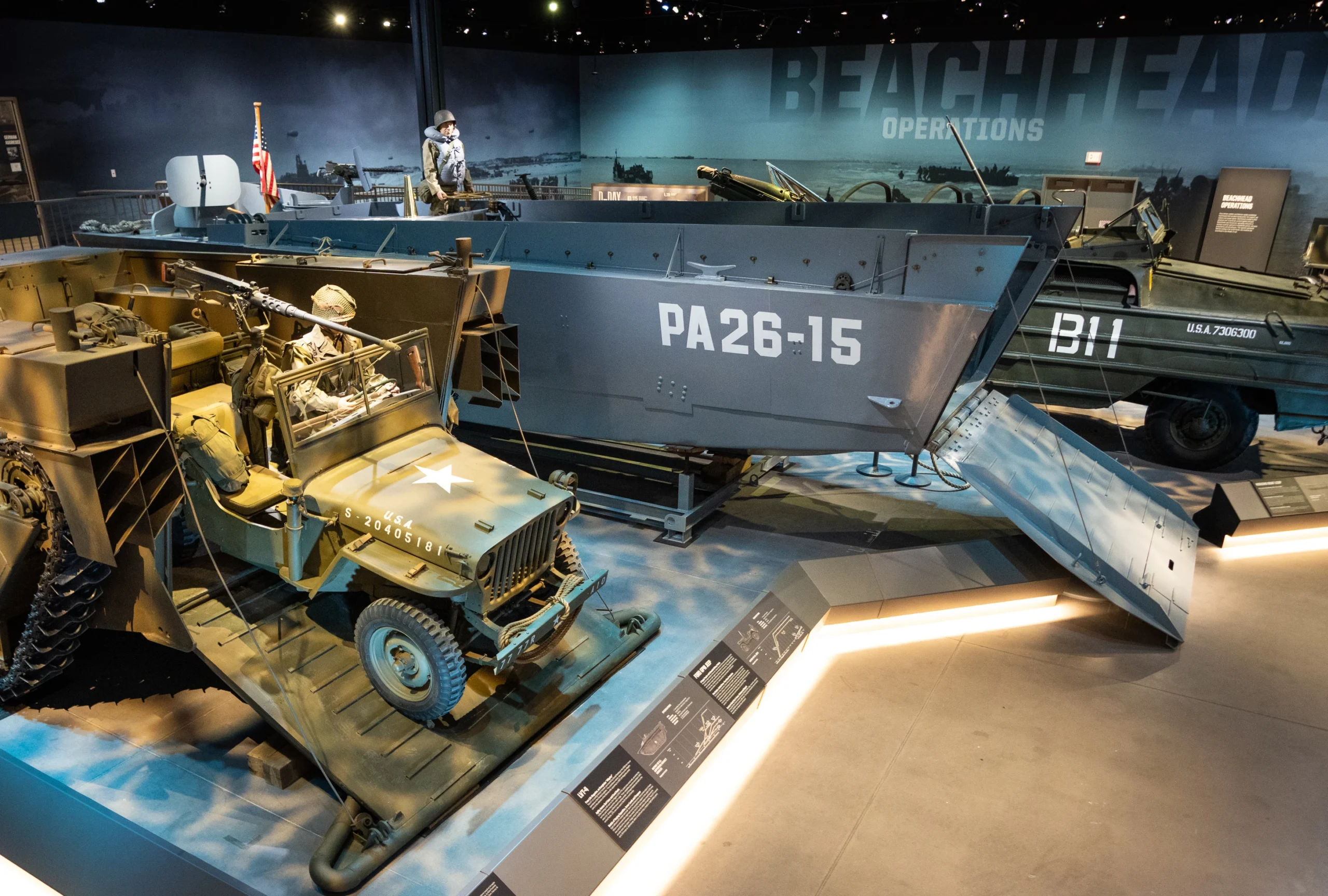
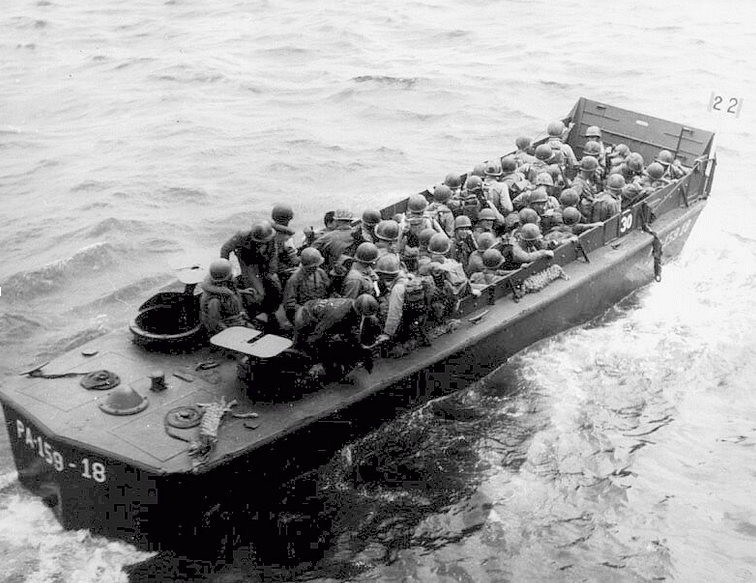
One of the most important was the Higgins boat, officially known as the Landing Craft, Vehicle, Personnel (LCVP). Designed by Andrew Higgins, it featured a shallow draft and a front-loading ramp—allowing troops and equipment to move directly onto beaches under fire.
Its design made large-scale amphibious landings possible and played a critical role in operations across both the European and Pacific theaters.
At the National Museum of Military Vehicles, a detailed diorama brings these early landing craft to life—showing how innovation met urgency in the opening years of the war.
Have you seen the Higgins boat in person—and does knowing its story change how you see World War II?
M551 Sheridan: Innovation, Controversy, and Combat in Vietnam
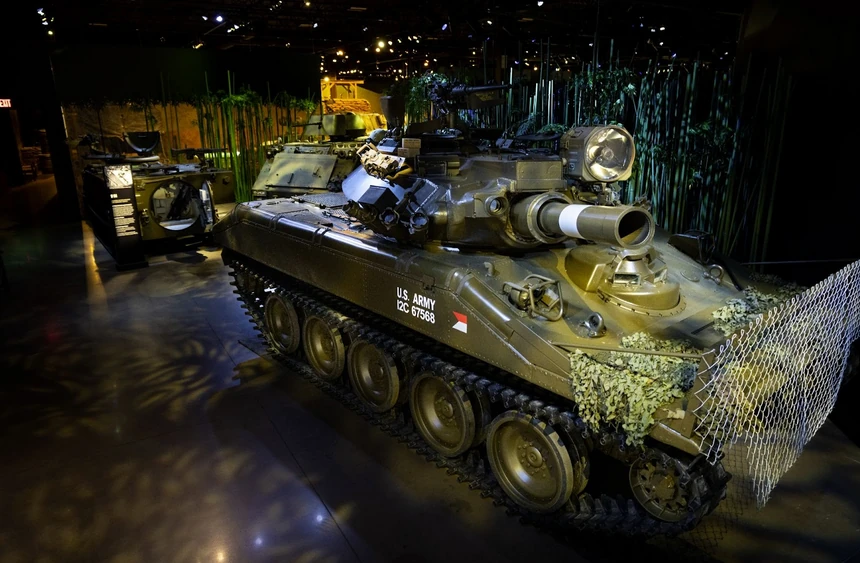
The M551 Sheridan is often remembered with a mixed reputation—described by many as “pretty negative or at best mediocre.”
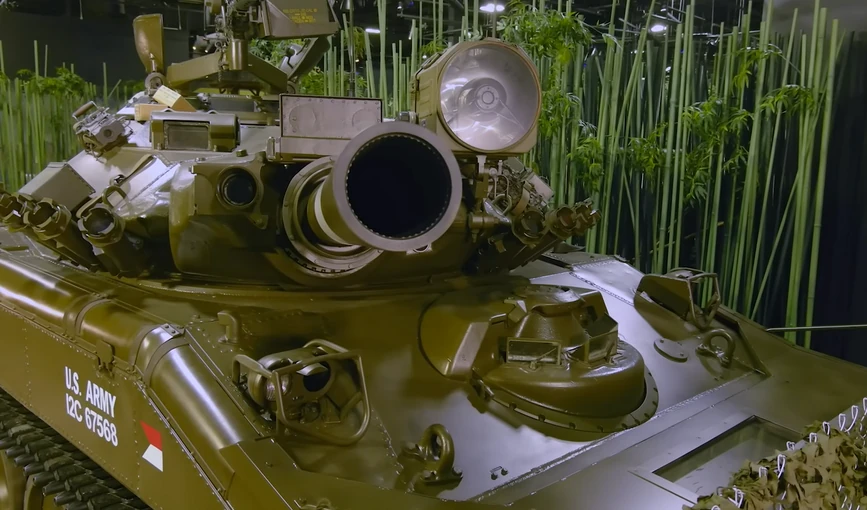
Originally conceptualized in 1959 as an Armored Reconnaissance Airborne Assault Vehicle, it was designed to be air-deployable, amphibious, and capable of increased firepower with improved protection. From the beginning, it faced multiple issues—especially with its gun launcher system and ammunition.
Introduced in Vietnam in 1969, the Sheridan was seen as a potential solution to a battlefield gap. The M113 offered mobility but limited firepower, while the M48 provided firepower but struggled in difficult terrain. The Sheridan aimed to combine similar mobility with heavier firepower.
During fighting near Bien Hoa in 1969, Sheridans were described as “indispensable,” and their canister rounds proved devastating in close-quarters combat.
At the same time, the vehicle had clear vulnerabilities. With roughly half an inch to an inch of armor, it was susceptible to mines and RPG fire—sometimes resulting in catastrophic damage. Crews responded by adding belly armor, a modification credited with saving lives, though it increased the vehicle’s weight.
The M551 Sheridan remains a study in trade-offs—mobility and firepower balanced against protection.
Success or failure—where do you land on the Sheridan?
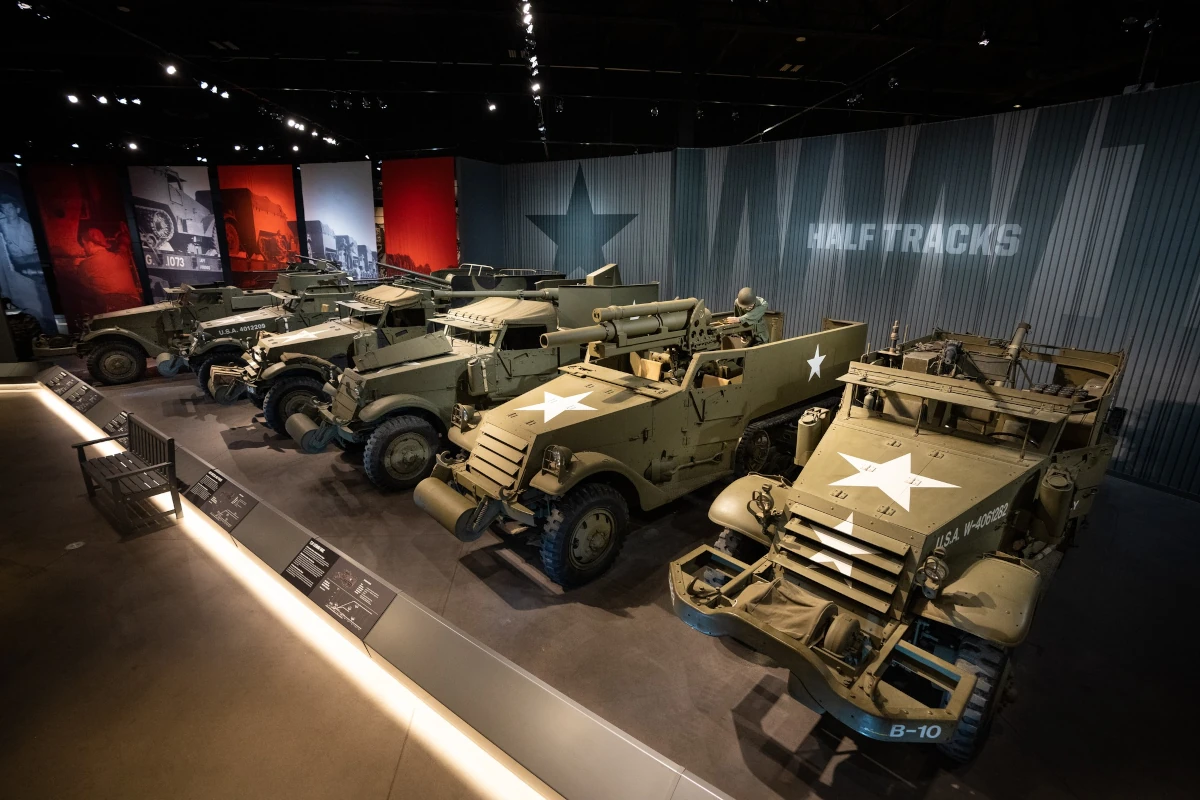
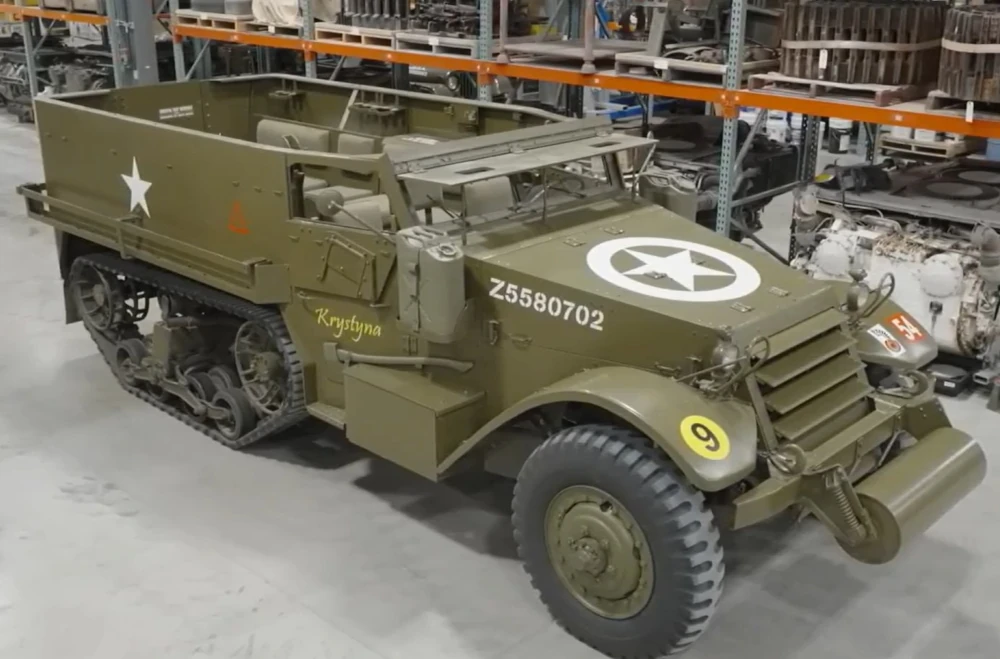
Half-Tracks of World War II: Inside the Museum’s Collection
Half-tracks played an important role during World War II—and at the National Museum of Military Vehicles, we’re able to show that story in depth.
Our collection includes 27 half-tracks:
• 8 fully restored and displayed inside the museum
• 17 currently awaiting restoration outdoors
• 2 additional versions in our restoration shop—some of which are used as parade vehicles
The first two half-tracks developed during World War II were the M2 and M3. White Motor Company developed the M2, while Diamond T Motor Car Company developed the M3. Both were designed, standardized, and introduced at the same time through a joint engineering effort to ensure a common design and nearly all interchangeable parts.
Looking at the M3, each vehicle was equipped with either:
• A 10,000-pound capacity winch, or
• An unditching roller, designed to help the vehicle cross ditches without getting stuck
Both the M2 and M3 used the same six-cylinder gasoline engine, producing 147 horsepower. One of the defining differences from earlier scout cars was the track and suspension system, which replaced rear wheels and provided better cross-country capability.
Despite their similarities, there are key differences:
• The M3 body extends 10 inches longer than the M2
• The M3 includes a rear door, while the M2 does not
• The M3 could carry 13 troops, compared to 10 in the M2
Each vehicle helps tell a deeper story about design, capability, and how these machines were used.

National Museum of Military Vehicles Home to Musket That Fired First Shot at Bunker Hill 250 Years Ago
The musket that fired the first shot at the Battle of Bunker Hill — a pivotal moment in American history — is on display at the National Museum of Military Vehicles in Dubois, Wyoming, thanks to owner Dan Starks. The museum’s vast collection of military artifacts ultimately serves a deeper purpose: to honor the countless known and unknown soldiers who sacrificed to uphold and honor American freedom over the past 250 years.

US Light Tanks: From Obsolete to Best on the Battlefield
This video provides a detailed history of American light tanks used in World War II, starting with the M3 Stuart and culminating in the M24 Chaffee. It explains the development of these tanks in response to lessons learned from the Spanish Civil War, where early American tanks like the M2A2 were found to be under-armored. The M3 Stuart, introduced in 1941, addressed some of these deficiencies with improved armor and a more powerful engine. However, its flat armor and small 37mm gun limited its effectiveness, especially in the North African campaign. Despite its shortcomings, the Stuart performed better in the Pacific, where it was comparable to Japanese tanks but still struggled with bunker penetration and jungle maneuverability. The M3A1 introduced improvements like a welded hull, a turret basket, and power traverse, while the M5 Stuart replaced the aircraft radial engine with twin Cadillac engines and introduced sloped armor for better protection.
The video continues by highlighting the M24 Chaffee, the most advanced American light tank of WWII, which featured a 75mm gun adapted from aircraft and an innovative torsion bar suspension system for superior mobility. It also covers specialized variants, including the M3 Satan flamethrower tank, which was designed for close-quarters combat against fortified Japanese positions, and the M22 Locust airborne tank, intended for use by paratroopers but largely ineffective in combat. While the Stuart series played a significant role in WWII, particularly in reconnaissance and infantry support, the Chaffee marked the pinnacle of American light tank design during the war. The video concludes by noting that lessons from these tanks influenced post-war armored vehicle development, particularly in airborne operations.
Starks presented with the WEDA 2022 Innovation Award at a ceremony at the museum in Dubois
Dan Starks, founder of the National Museum of Military Vehicles near Dubois, Wyoming, transformed his personal passion for military history into a world-class museum housing 488 military vehicles and rare artifacts, including the musket that fired the first shot at the Battle of Bunker Hill. Originally a hobby, his collection grew after acquiring tanks and artifacts from the Normandy Tank Museum, eventually leading to the museum’s creation—a $100 million investment ensuring future generations understand the sacrifices of American service members. The museum has significantly impacted Dubois’ economy, drawing over 40,000 visitors annually and inspiring additional investments, including a vehicle restoration shop, new housing, and businesses like a bowling alley and bakery. Starks and his wife, Cynthia, continue to expand their contributions, addressing the town’s labor and housing shortages while envisioning future museum expansions covering World War I, the Cold War, and the Gulf Wars.

IDEA Inc. Executive Director and Wyoming Economic Development Association board member Kevin Kershisnik, left, poses with National Museum of Military Vehicles founder Dan Starks, center, who was presented with the WEDA 2022 Innovation Award at a ceremony at the museum in Dubois. (Courtesy Photo, Christine Snow/Dubois Frontier)

Museum Featured on Fox Nation’s Hidden Gems hosted by Laura Ingraham
Dan Starks, CEO of the National Museum of Military Vehicles in Dubois, Wyoming, has invested over $100 million of his own money to create a museum honoring veterans and educating future generations about American military history. His passion began with restoring a single Sherman Tank for a Fourth of July parade, but his collection has since grown. Starks and his wife built the museum, close to Yellowstone and Grand Teton National Parks, as a tribute to those who served, emphasizing the importance of preserving and teaching the history of American freedom. The museum was featured in the premiere episode of Fox Nation’s Hidden Gems, hosted by Laura Ingraham, which showcases lesser-known American treasures.

National Museum of Military Vehicles grand opening reminds us to honor veterans everyday
On May 28, 2022, the National Museum of Military Vehicles in Dubois, Wyoming, hosted a packed grand opening ceremony under its Veterans Pavilion, drawing a standing-room-only crowd despite the rain. The event featured a color guard by U.S. Army Recruiters from Casper, music by the Lander Volunteer Fire Department Pipe & Drum Band, and a recorded National Anthem by the Riverton High School Jazz Choir. Wyoming Governor Mark Gordon opened with a prayer and a quote from General Patton, urging attendees to remember the sacrifices of service members like Chance Phelps. Distinguished speakers included LTG Roger Schultz (Ret) and former VFW Commander William “Doc” Schmitz, who both honored the museum’s founder Dan Starks for his dedication to veterans. Starks emphasized the museum’s mission to honor military service and American freedom, concluding the ceremony before attendees enjoyed post-event activities, including tank rides and a shooting range.