The Badge of Military Merit: America’s First Military Decoration
In the final years of the American Revolution, General George Washington introduced a form of recognition that acknowledged the merit of a common soldier at a time when awards were typically reserved for officers and the elite.
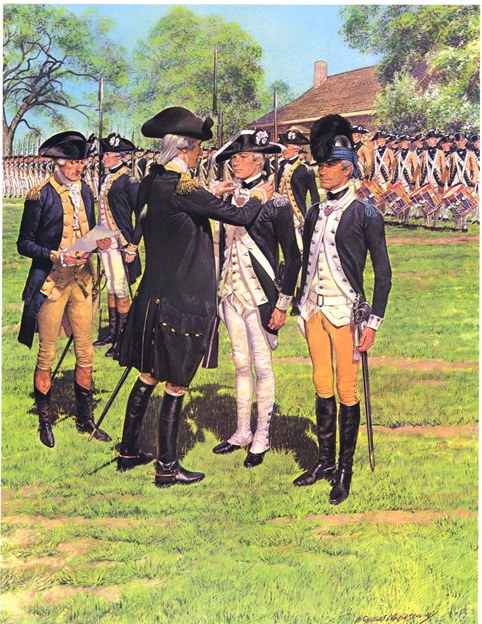
On August 7, 1782, from his headquarters at Newburgh, New York, Washington established the Badge of Military Merit. This badge became a symbol of the values that defined the Revolutionary War and the nation that would emerge from it.
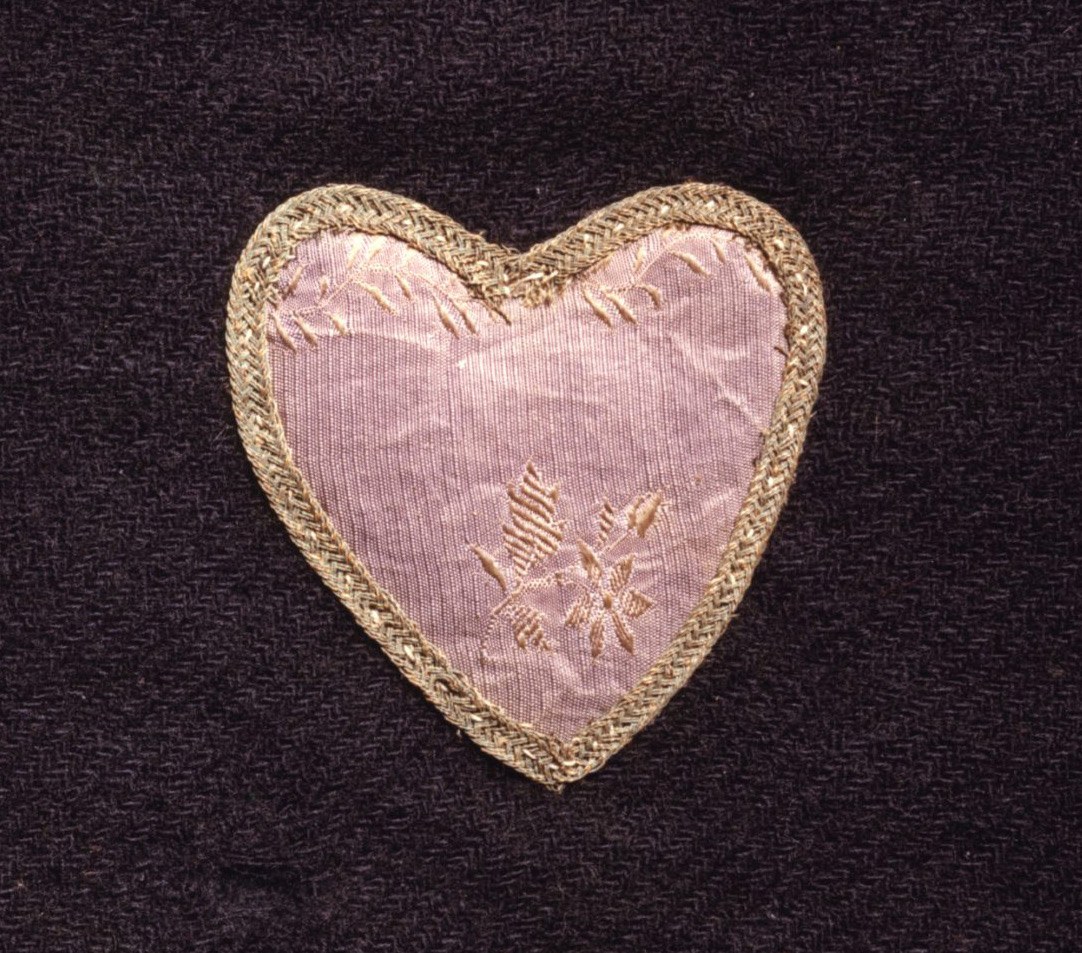
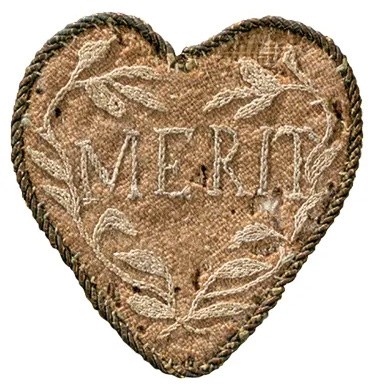
The Badge of Military Merit consisted of a purple, heart-shaped piece of cloth edged with narrow silver trim, worn over the left breast of the uniform. The color purple had long been associated with honor and sacrifice, and Washington’s choice reflected that tradition. Unlike European decorations of gold and enamel, this badge was modest, handmade, and accessible. It was awarded for “any singularly meritorious action,” as well as for exceptional fidelity and service. Just three soldiers are known to have received it during the war, making it one of the rarest military decorations in American history.
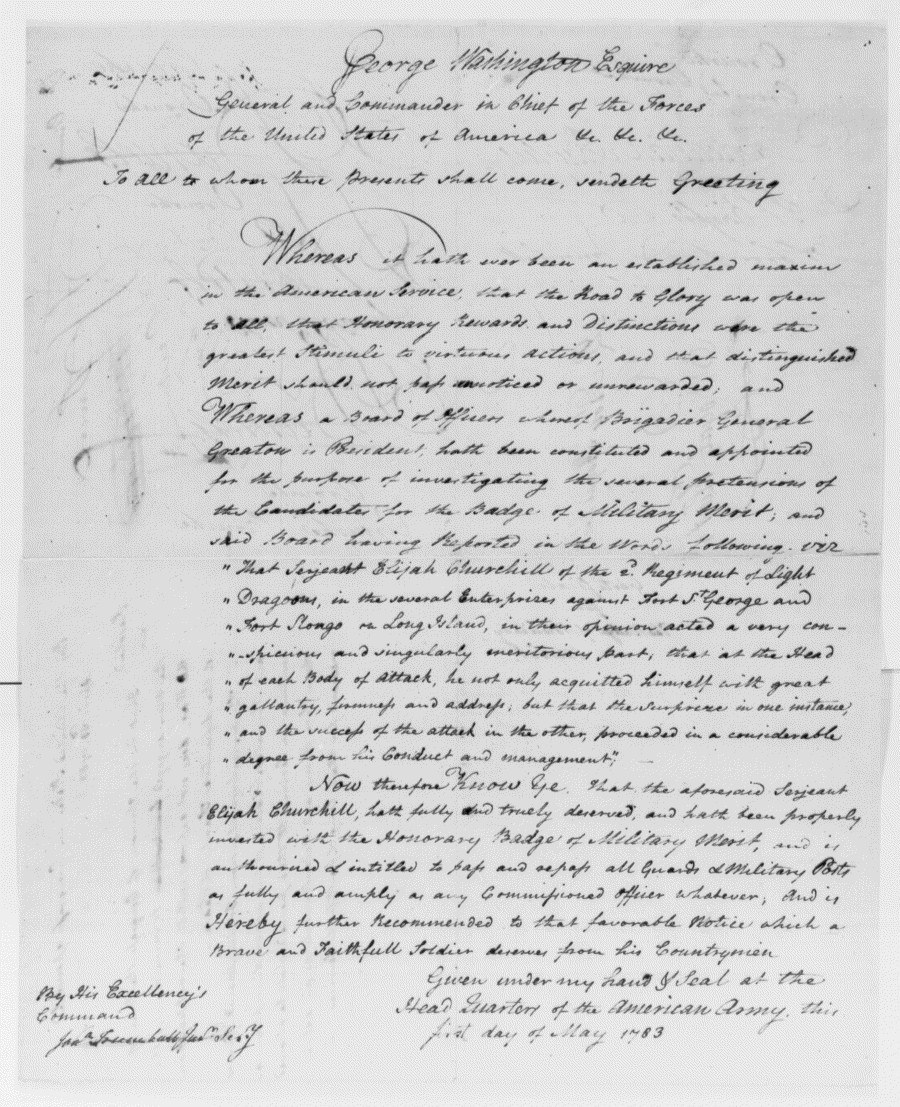
The first Badge of Military Merit was presented to Elijah Churchill on May 3, 1783. Churchill started his military career as a minuteman on the Lexington alarm and went on to become a sergeant in the 2nd Continental Light Dragoons. He was cited for bravery on two separate missions, both of which were raids on Loyalist caches on Long Island, New York.
The first of these raids was on Fort St. George in November 1780, and the second was at Fort Slongo, now known as Fort Salonga, in October 1781. These operations required speed, precision, and courage behind enemy lines. Churchill’s actions demonstrated the kind of merit Washington sought to recognize. Sergeant Elijah Churchill’s Badge of Military Merit is currently on display at the National Purple Heart Hall of Honor in New Windsor, New York.
A second recipient was awarded the Badge of Military Merit on May 3, 1783. William Brown, a sergeant in the 5th Connecticut Regiment, received the Badge of Military Merit for his courage in the attack of the British redoubt at the Siege of Yorktown, the last major military engagement of the American Revolution.
Rather than waiting for the passage to be cleared, Brown carried his men over the obstructions and into the redoubt, capturing it within 10 minutes. With these defenses compromised and no hope of retreat, British General Cornwallis ultimately surrendered.
When the second Badge of Military Merit was awarded to Sergeant Brown, his citation read that he “conducted a forlorn hope with great bravery, propriety, and deliberate firmness, and his general character appears unexceptionable.”
In the 1920s, Brown’s badge was found in a Deerfield, New Hampshire barn. It is now on display at the American Independence Museum in Exeter, New Hampshire, on behalf of the Society of the Cincinnati, New Hampshire Branch.
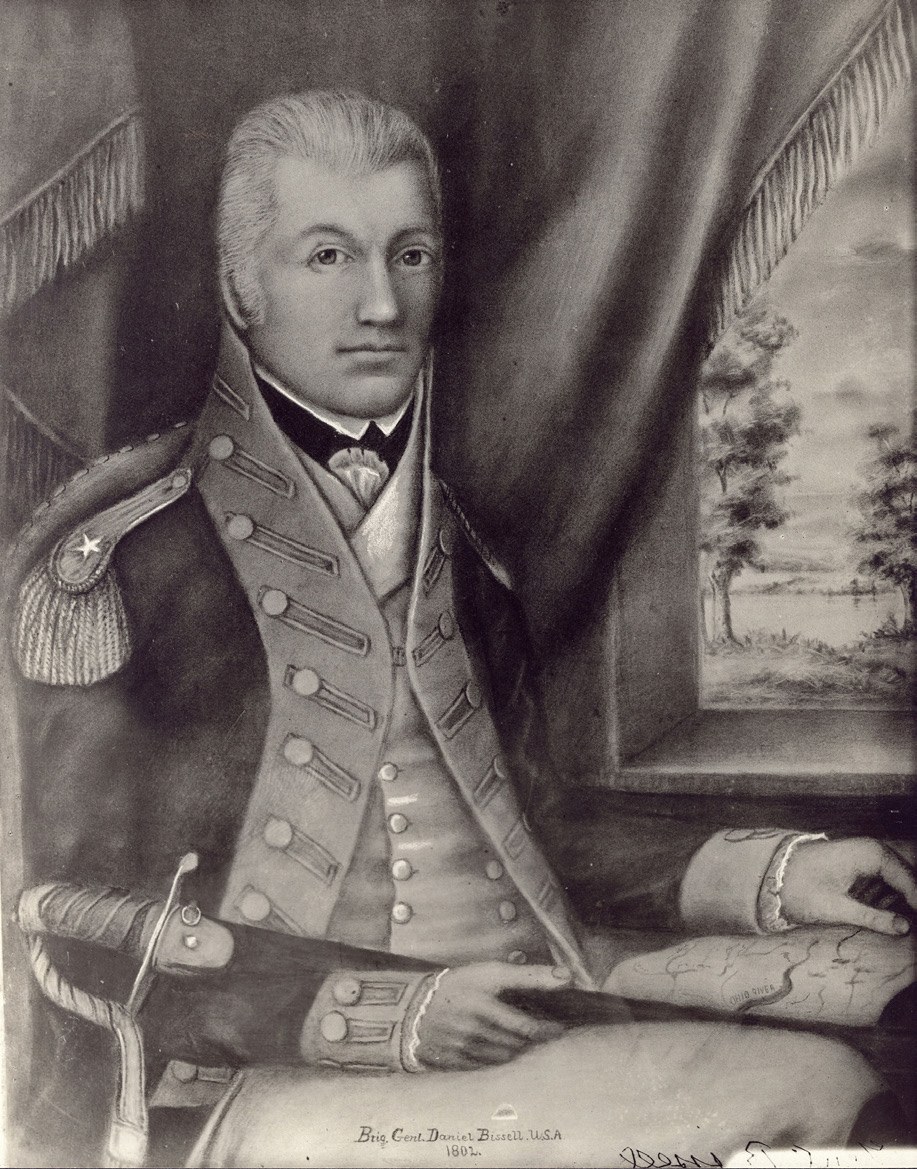
The third and last known recipient of the Badge of Military Merit was Sergeant Daniel Bissell of Windsor, Connecticut.
Sergeant Bissell was a member of Captain David Humphreys’ Company of the Second Connecticut Regiment of the Continental Line.
To gain valuable intelligence, Bissell volunteered to enlist in a Provincial regiment of the British Army, infiltrating their lines in New York City. For over a year, Bissell posed as a deserter, gathering intelligence on British troop movements and fortifications under constant risk of discovery.
He successfully brought back detailed intelligence upon returning to American headquarters in September 1782 and maintained that he never bore arms against his fellow American soldiers.
Sergeant Daniel Bissell was formally presented with his Badge of Military Merit on June 10, 1783, in Newburgh, New York. He later reported that this award was lost in a house fire in 1813 in Ontario County, New York.
After the Revolutionary War, the Book of Merit, which held the names, regiments, and actions of those who had earned the Badge of Military Merit, was unfortunately lost. The award was largely forgotten and absent from American military tradition for nearly 150 years.
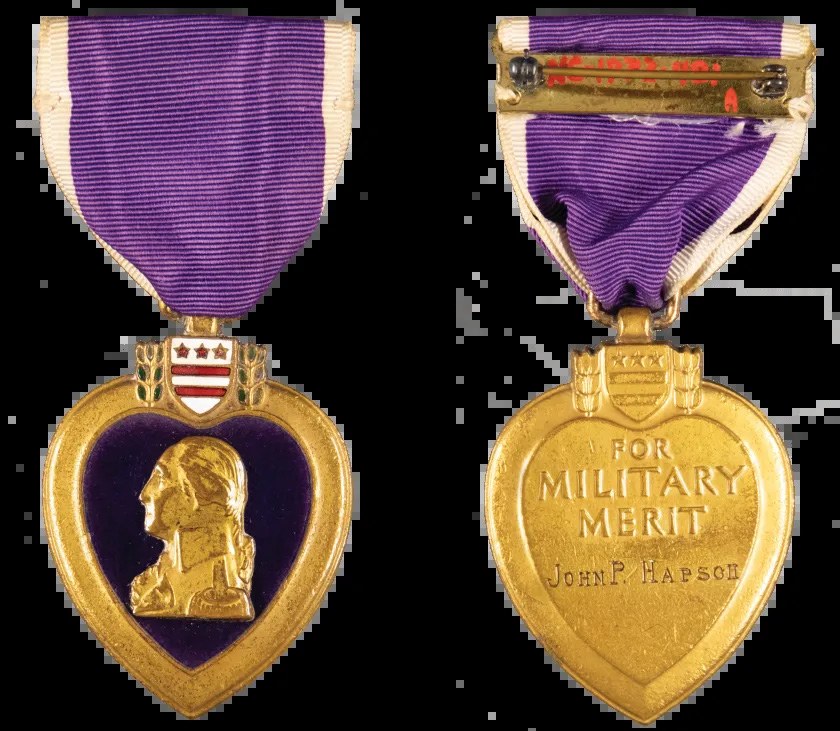
However, on February 22, 1932, the bicentennial of George Washington’s birth, the award was reborn as a new medal with a different purpose: the Purple Heart. The present-day medal honors U.S. service members who have been wounded or killed in combat, rather than a “single, meritorious act.”
The designer of the medal, Elizabeth Will, drew inspiration from Washington’s heart-shaped, purple badge. Centered on the face of the Purple Heart is a left-facing profile bust of George Washington, and above the heart appears a shield of the coat of arms of George Washington between sprays of green leaves. On the reverse, the words, “For Military Merit” are engraved.
Although the Badge of Military Merit may have faded from the minds of many, the Purple Heart is now one of the most recognized military decorations in the United States, with nearly two million recipients. Purple Heart Day is observed on August 7 of each year, the same date that George Washington created the Badge of Military Merit in 1782.
While the original badge may have been a simple piece of sewn cloth and embroidery, Washington’s intent was to recognize ordinary men who had shown extraordinary bravery.
Today, the Purple Heart continues this legacy by honoring those wounded in service to the nation that Washington and the Continental Army fought to secure nearly 250 years ago.
Today, the Purple Heart continues this legacy by honoring those wounded in service to the nation that Washington and the Continental Army fought to secure nearly 250 years ago.
Images from this story