The Last Flights Out: Evacuation Operations of April 1975
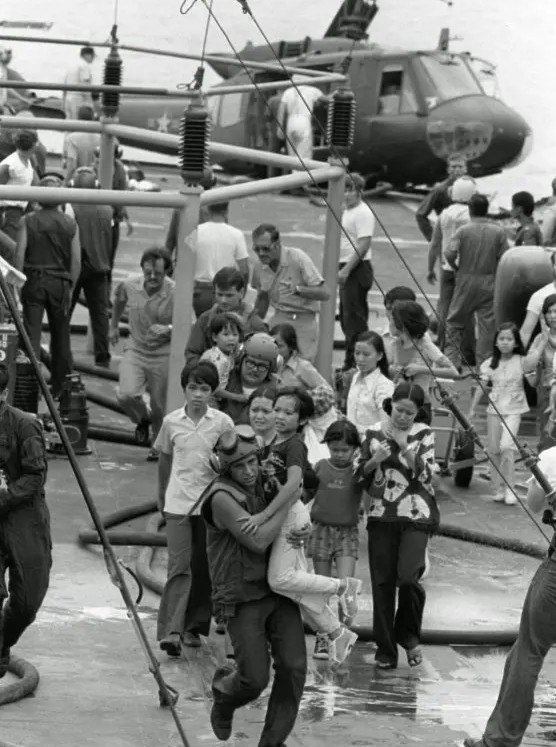
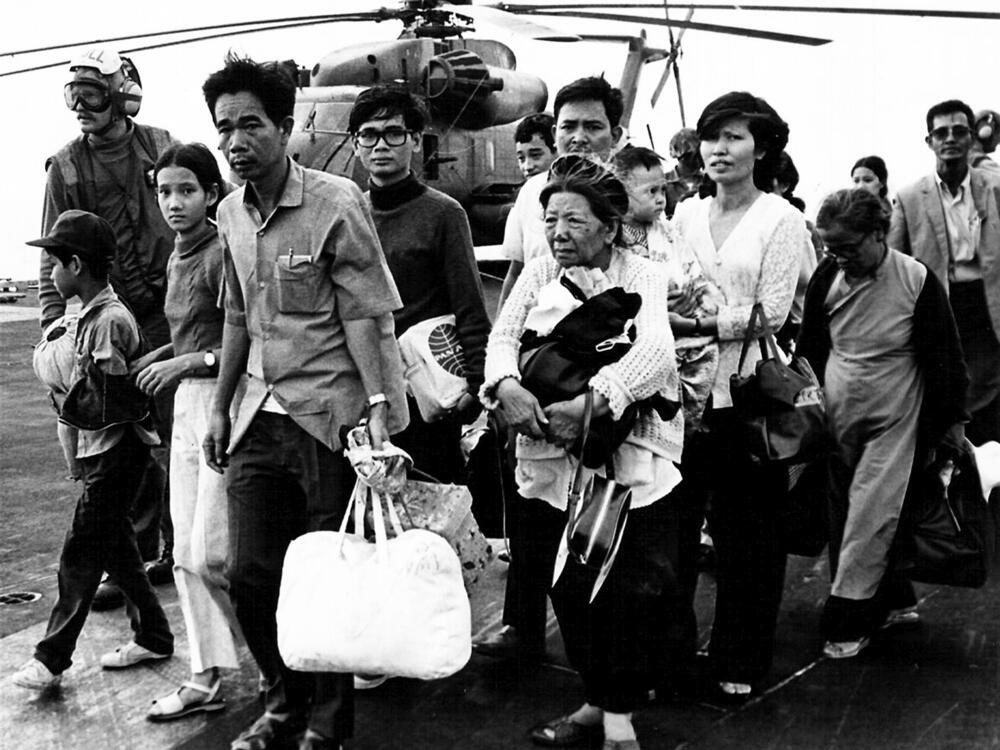
In spring 1975, a series of operations were executed to remove U.S. personnel and South Vietnamese civilians whose lives were at risk due to their association with the United States. The Vietnamese refugee airlift was among the largest aerial evacuations in history. The U.S. Air Force, Navy, Marine Corps, and private contractors evacuated thousands of refugees to islands in the Pacific Ocean, and eventually to the United States. These operations were filled with chaos, fear, and hope, and impacted the lives of all who were involved.
Operation Eagle Pull: The Cambodian Evacuation
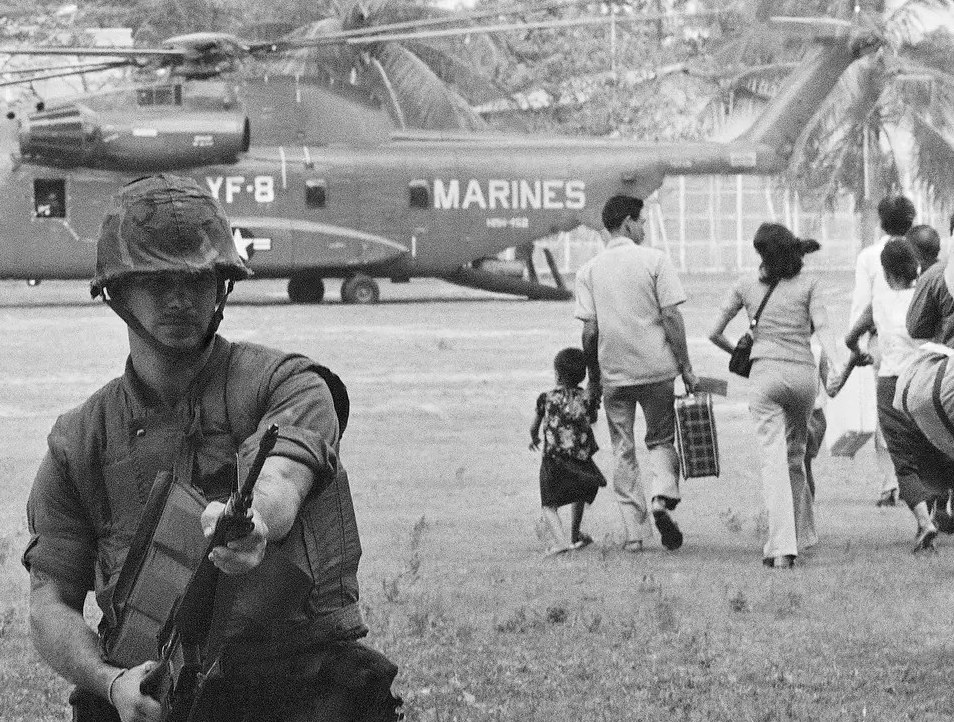
Before the Vietnam evacuations began, the first major signal of the coming crisis was Operation Eagle Pull. This operation was the evacuation of U.S. personnel and allied Cambodian civilians from Phnom Penh, Cambodia, on April 12, 1975. Phnom Penh was one of the last remaining strongholds of the Khmer Republic, and it was clear that air evacuation by helicopter was the only viable option in the region. Operation Eagle Pull was a tactical success carried out without any loss of life. Five days later, the Khmer Republic collapsed, and the Communist Party of Kampuchea, or Khmer Rouge, occupied Phnom Penh. As North Vietnamese forces closed on Saigon later that month, similar plans were activated for South Vietnam.
Operation Babylift: Giving Children a Second Chance
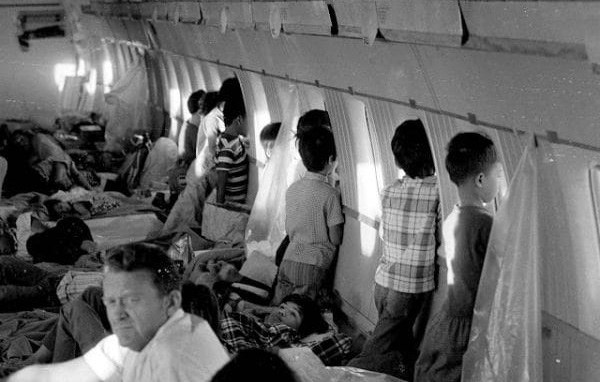
Operation Babylift was announced by President Gerald R. Ford on April 3, 1975. The operation’s goal was to evacuate orphans and vulnerable children from South Vietnam to the United States and other allied nations before Saigon fell. On April 4, the first Baby lift flight ended in tragedy when a U.S. Air Force C-5 Galaxy experienced explosive decompression shortly after takeoff and crashed near Saigon. 138 people were killed, including 78 children. The mission continued despite this disaster, and over the following weeks, more than 2,500 children were evacuated by April 26. However, even as Babylift flights carried children out of the war zone, the North Vietnamese were steadily closing in on South Vietnam’s capital, accelerating the broader evacuation of Saigon.
“I just want to thank those who were involved during Operation Babylift in 1975. I was born in Vietnam in 1975 and was told that I was likely an orphan at the time. I was 3 months old when I was adopted by my parents in the U.S. I have served in the U.S. Army for almost 14 years and thought it was the least I could do for a country that brought me over and accepted me.” -Jacob Swartout, Babylift adoptee, expressing his gratitude in a letter to Adopt Vietnam.
Operation Frequent Wind and the Fall of Saigon
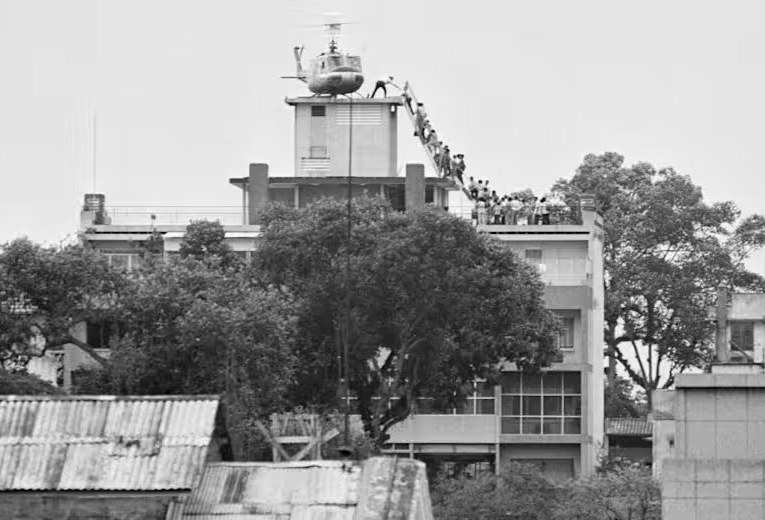
By late April 1975, refugees were flooding into Saigon from surrounding provinces, overwhelming the city’s infrastructure. Fear heightened among civilians as the imminent fall of the capital became evident. Families listened anxiously as radio broadcasts began signaling the final stages of evacuation. They scanned rooftops for helicopters and gathered their essential belongings while sounds of artillery and rocket fire filled the air. Many South Vietnamese who had worked with U.S. military units, government agencies, or media organizations would likely face imprisonment or execution if they were left behind.
“The signal to evacuate was ‘White Christmas.’ I remember waking up at 3:00 in the morning and hearing ‘White Christmas’ and wondering what the hell it was going to be like trying to walk out of this place.” -Roy Rowan, journalist in Saigon, quoted in Time Magazine.
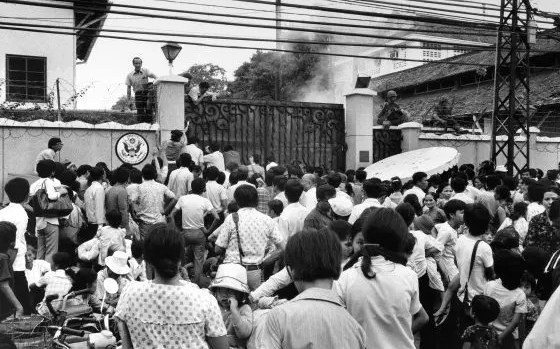
The final evacuation, Operation Frequent Wind, began on April 29, 1975. A coded radio message signaling the start of the operation included Bing Crosby’s “White Christmas,” alerting U.S. personnel and designated evacuees that a helicopter evacuation was underway. Due to rocket fire, the use of Saigon’s airport and fixed-wing aircraft were no longer a viable option. The evacuation shifted entirely to helicopters operating from the U.S. Embassy and the Defense Attaché Office (DAO) compound. Civilians gathered outside the embassy and compound, clutching their documents and children, hoping for the chance to evacuate. As the crowds grew, U.S. Marines did their best to maintain order while under constant pressure from time limits, aircraft capacity, and growing panic.
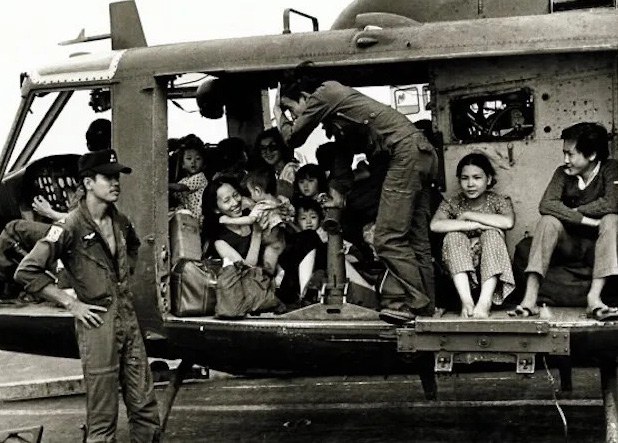
Over an eighteen-hour period, U.S. Marine and Navy helicopters flew continuous evacuation missions to ships of the U.S. Seventh Fleet stationed offshore. That night, the U.S. Marines providing security were withdrawing and arranging the demolition of the DAO, U.S. equipment, files, and cash. In total, more than 7,000 people were evacuated by helicopter during Operation Frequent Wind.
By mid-morning on April 30, 1975, South Vietnamese President Duong Van Minh had announced the surrender of the Republic of Vietnam. For those who escaped, this was the beginning of their exile from home and the start of their new life in the United States.
“There was the elation of now being out of there and out of danger. Then I reflected on it and I thought this was the most exciting thing that ever happened to me. And I was glad at last that I felt safe again, the safest I felt in 18 hours. But it was such an intense time, at the same time, I felt sad that it was over. I would have liked to get those 450 people out. But those decisions were so much bigger than me, there was nothing I could do.” -1st Lt Thomas Ochala on the difficulty of leaving behind 450 Vietnamese at the U.S. Embassy in Saigon.
The Lasting Impact
In total, more than 100,000 Vietnamese refugees were evacuated by U.S. forces in April 1975 through air and sea operations. Many arrived in the United States with little more than identification papers and memories of a home they would never see again.
Adjusting to life in the U.S. often required overcoming language barriers, economic hardship, and discrimination. In an already emotionally charged political climate, some people who had lost friends or loved ones in the Vietnam War displayed bitterness toward Vietnamese immigrants. Despite this, many persevered and went on to build families, businesses, and communities across the United States.
“I faced uncertainty and death to have lived this long. My family and I have been blessed, and I am grateful to have lived this life to pay back for all the blessings.” - Manh Nguyen, who was nine years old when evacuated from Saigon. Nguyen went on to serve in the U.S. Army, and is now a Defense Logistics Agency employee with DLA Weapons Support.
The evacuation of Saigon required coordination from members of the U.S. Navy, Marine Corps, and Air Force who operated under extreme pressure and made rapid judgment calls to safely evacuate as many people as possible. The difficulty of maintaining order amid chaos, the guilt of leaving people behind, and the responsibility of safeguarding civilians left a lasting impact on the service members involved. This evacuation is not remembered as a victory or defeat, but rather a duty fulfilled under extreme circumstances and the knowledge that their actions saved lives. Reflecting on these operations serves as a reminder that despite the politics and controversy surrounding the Vietnam War, these operations undoubtedly made a difference in the lives of thousands of Vietnamese civilians who entrusted their safety to the U.S. military.
“Every time I see the ship [USS MIDWAY] I kind of relive that day when it was out there waiting for us. I don’t look back. This is my country. I move forward, and I repay what they have given me.” -Stephanie Dinh, an evacuee aboard the USS Midway during Operation Frequent Wind nowvolunteers at the USS Midway Museum in San Diego, California.
Images from this story