The 81mm Mortar .50 Caliber M-2 Heavy Barrel Machine Gun Piggyback
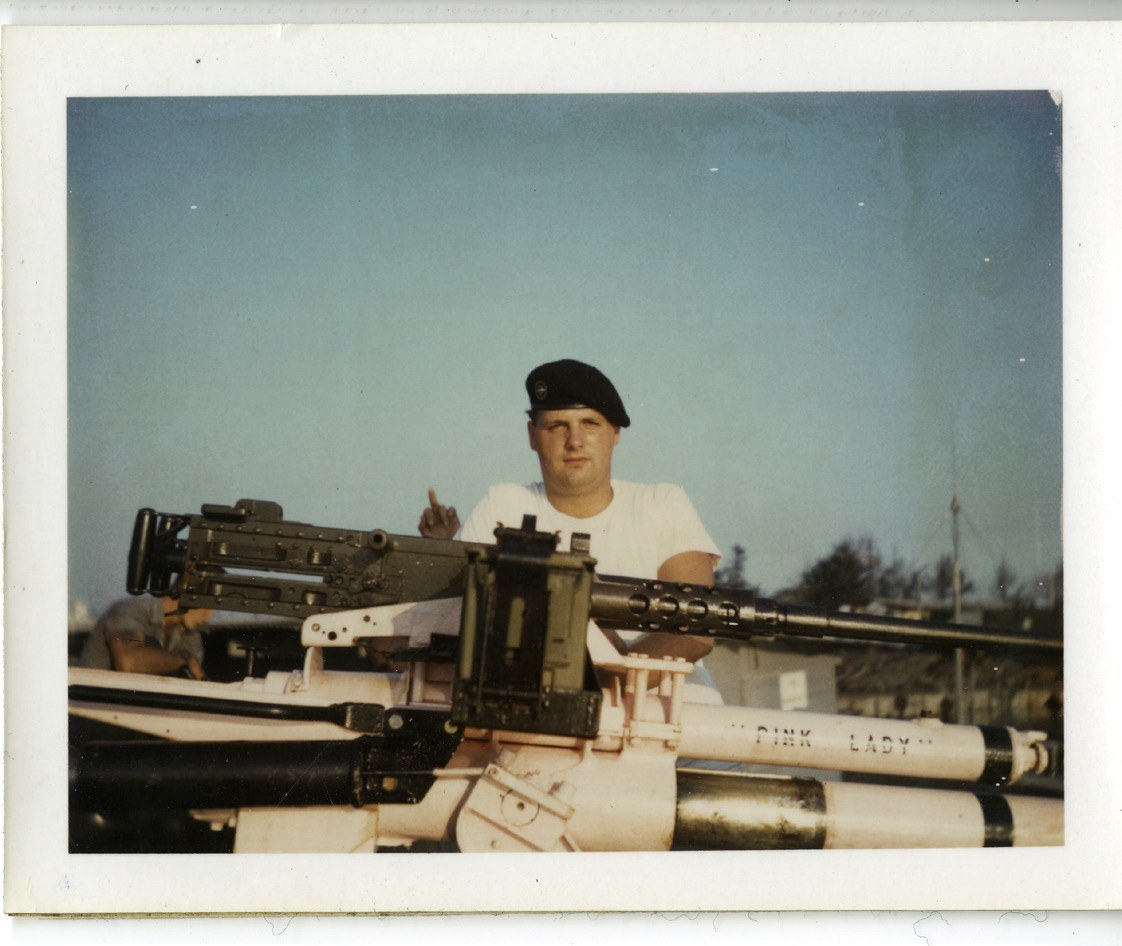
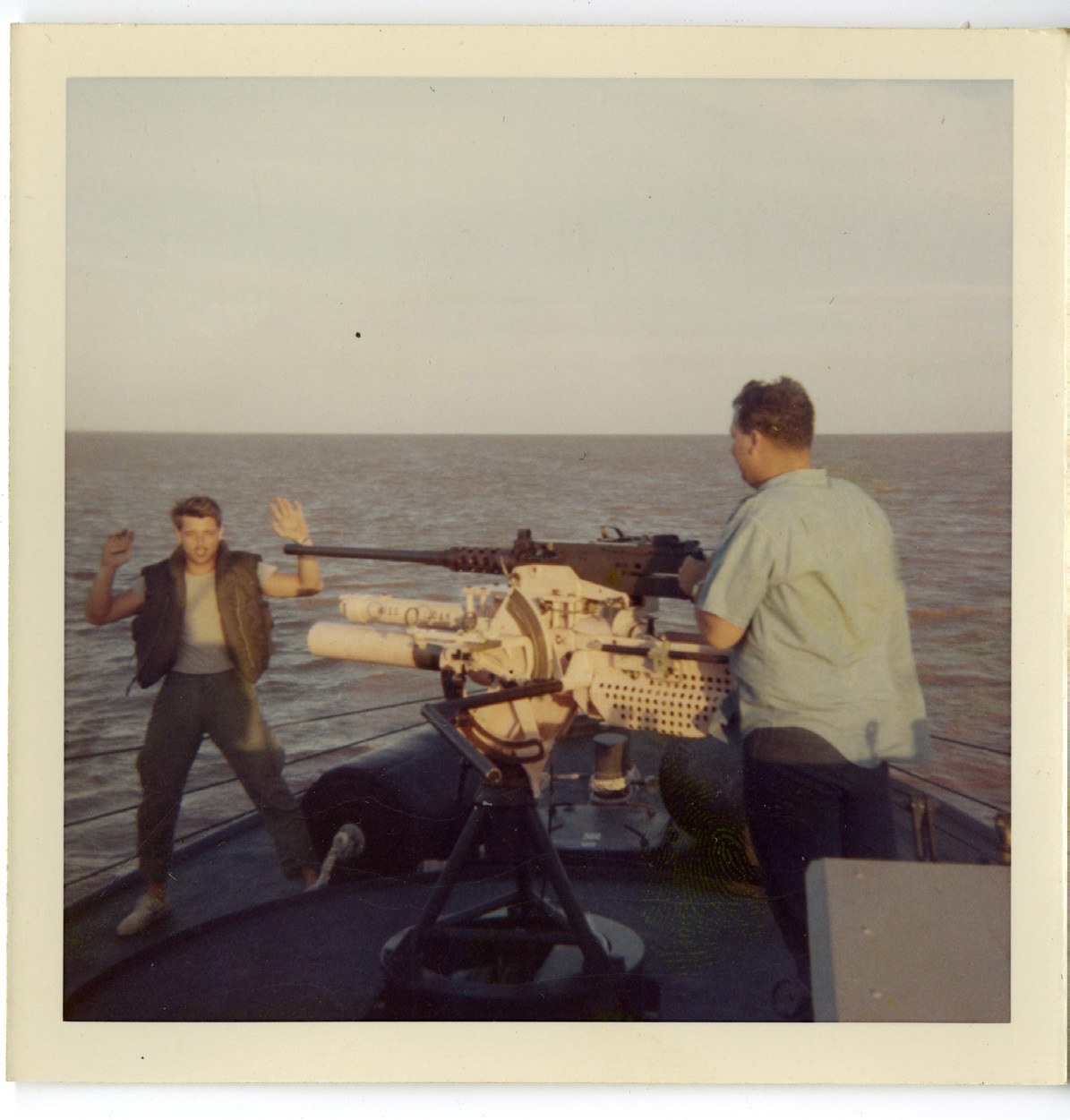
Including Including never before published photos of Vietnam War Coast Guard Combat Veteran Tom Davis!
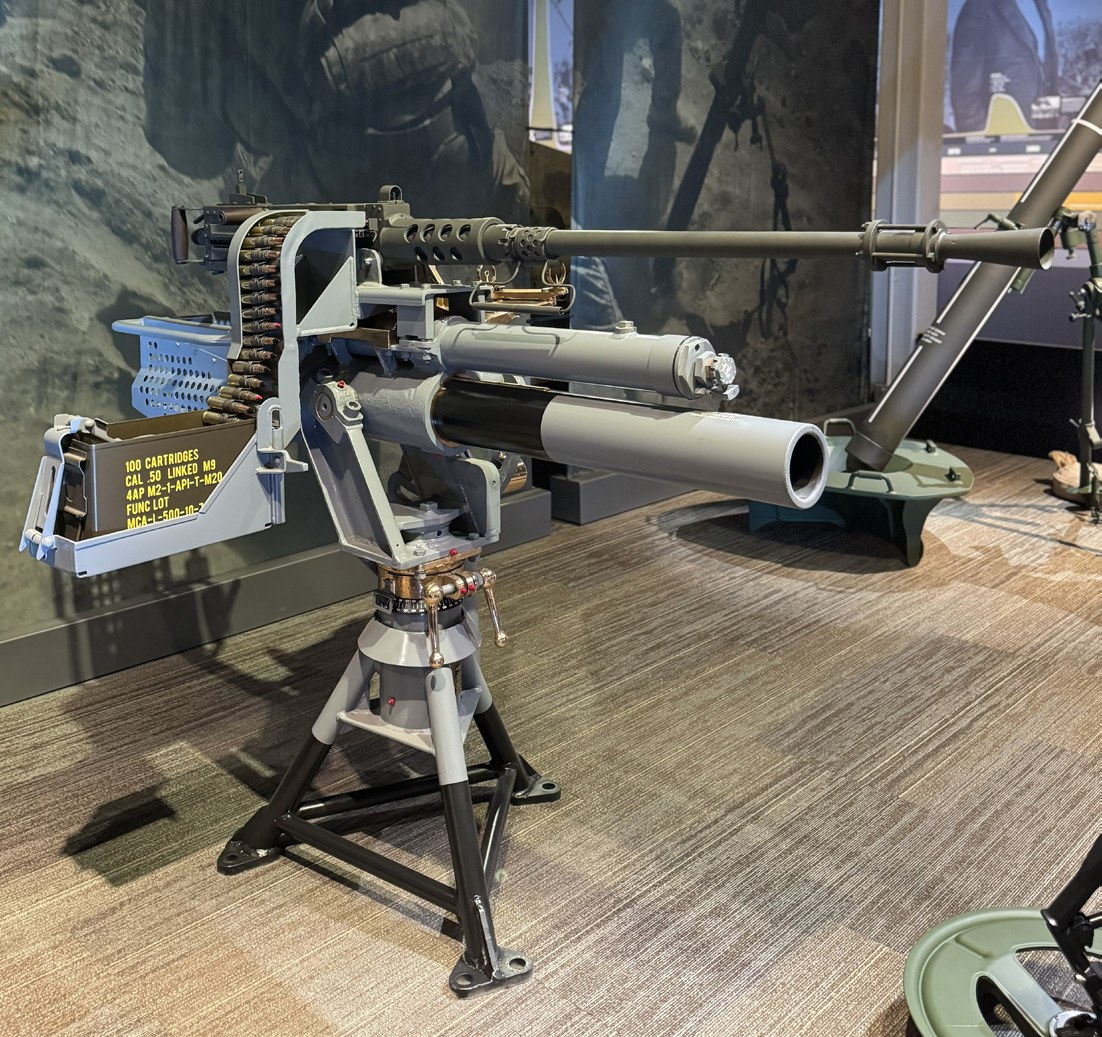
On display in the Patton Gallery of NMMV is an 81mm Mortar Mk 2 Mod 1, Serial Number 1005.
In 1947, the United States Coast Guard (USCG) started deploying cutters known as “weather ships” in both the Atlantic and Pacific Oceans. Their main mission was to collect meteorological data, then report it to the U.S. Weather Bureau. Additionally, when an aircraft needed to make an emergency landing at sea, Coast Guard personnel used either mortar-fired parachute flares or deck guns to fire flares into the sky to illuminate the surrounding area for landing.
The existing deck guns and mortar launching parachute flares at the time did not perform well. In most cases the light they provided either burned too bright, blinding pilots, or it ignited at too low an elevation to be useful. Also, the black powder propellant used to launch the illumination flare required cleaning the bore and action after firing only 4-5 rounds. These issues caused the Coast Guard to investigate a different solution for the at-sea illumination mission.
In 1962, the Coast Guard found a potential solution in an existing system that the U.S. Navy was developing. The Navy took an existing 81mm mortar used by both the Army and Marine Corps and developed what was designated the Mk 2 Mod 0 81mm mortar, capable of firing at both highangle and direct-fire targets. The muzzle-loaded mortar could be fired by either drop fire, like a traditional mortar, or by a trigger mechanism.
In 1963, the USCG received two mounts from the U.S. Navy and began a testing and evaluation process off the coast of Bermuda. Mounting the Mk 2 Mod 0 81mm mortar aboard a 311-foot former seaplane tender, several rounds were fired. The results were considered successful. The Coast Guard pilots participating in the tests reported the illumination provided by the new system was more than adequate, even illuminating their instrument panels. In addition, the faster rate of fire that the system provided was an advantage over the Coast Guard’s existing systems.
After successful testing, the Coast Guard Office of Gunnery and Readiness approved the installation of the 81mm mortars for deployment on their ocean station cutters and was also under consideration to replace the aging 20mm Oerlikon machine guns mounted on its 82-foot Point Class and 95-foot Cape Class patrol boats. These cutters’ primary mission was law enforcement, but they were frequently called to conduct search and rescue missions. The thought process was that the new weapon, with some modifications, could support both missions, so the Coast Guard set out to improve on the mortar’s offensive capabilities.
This mission fell to the only ordnance man in the Coast Guard, Chief Warrant Officer Elmer L. Hicks. Hicks, a former fire control technician, undertook the development of the multi-use weapons system. By mid-1964, he came up with the idea of mounting a .50 caliber M-2 HB machine gun on top of the 81mm mortar, and it seemed likely that this weapons system would satisfy all requirements.
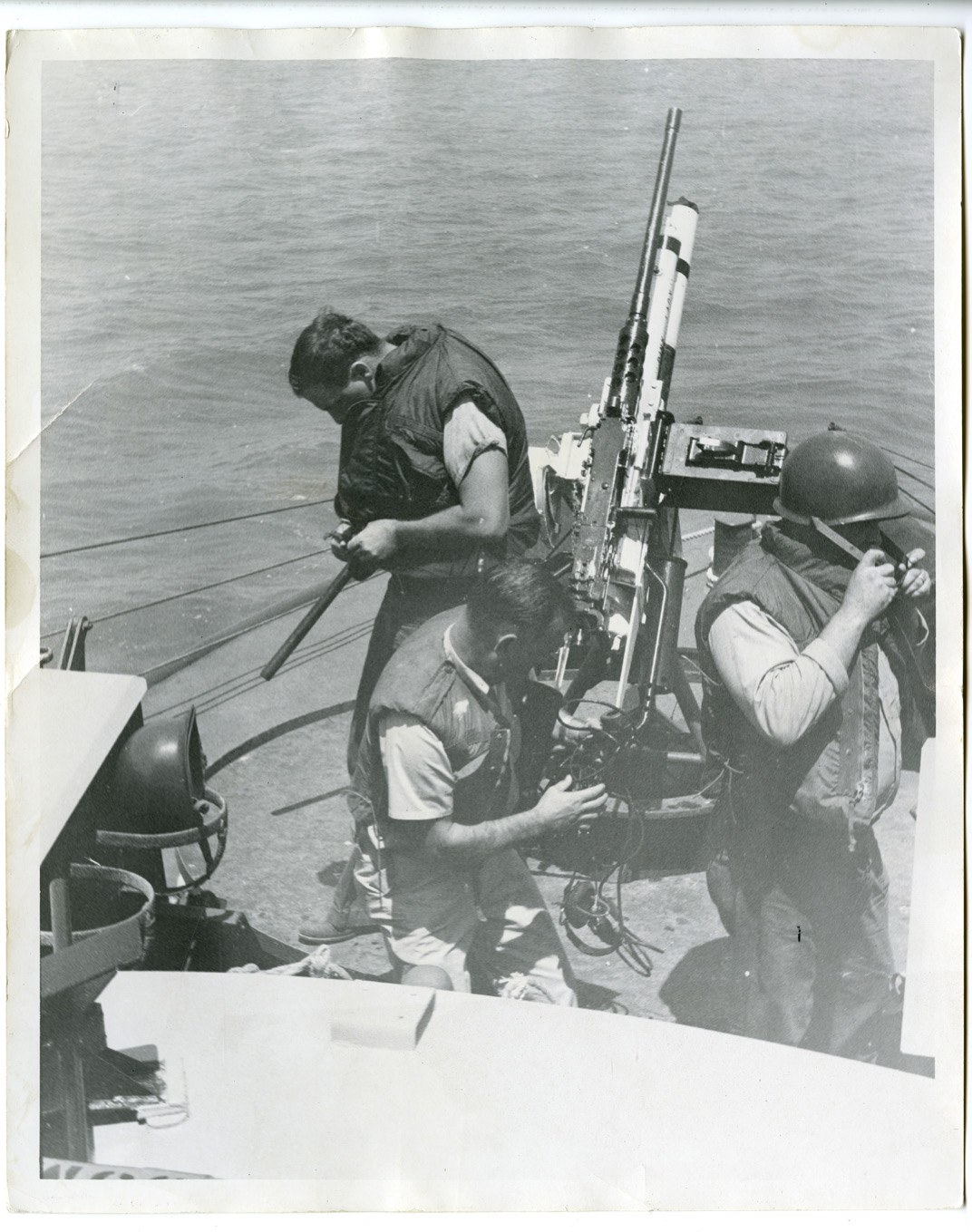
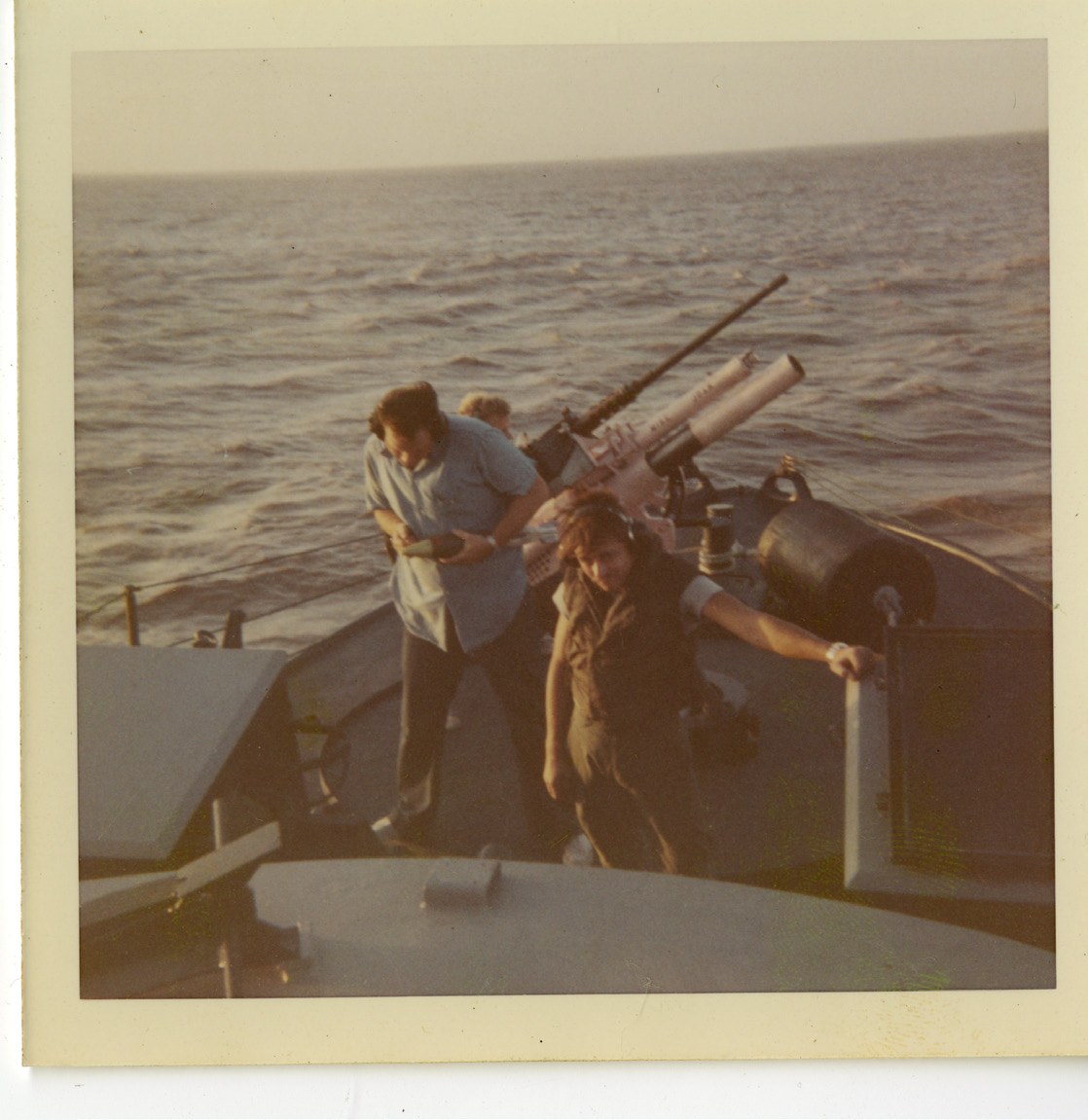
At the Coast Guard Yard in Curtis Bay, Maryland, Hicks, working with three other personnel, interpreted the sketch of the weapon system. Within eight hours, they had developed the prototype of the Piggyback arrangement. Because all Coast Guard weapons of .50 caliber and above were owned by the Navy, Hicks had to ask the Navy Bureau of Ordnance for permission to adapt the mortar to dual purpose use. The Navy granted this permission, and within two days the first mount was fabricated. In 1964, the system was successfully test-fired at Dahlgren Proving Grounds, Virginia. Testing showed that added weight from the mortar improved the accuracy of the machine gun, in spite of the roll and pitch of the boat. In Vietnam, it was reported that crews were able to make hits on moving sampans at more than 1,000 yards.
Unless fitted with no fire zone mechanical stops, the mortar had 360 degrees of traverse and -30 degrees of depression and +71.5 degrees of elevation. Rate of fire was 18 rounds per minute at 45 degrees elevation in drop fire mode and 10 rounds/minute in trigger fire mode. Sights for the mortar were attached to the left side of the elevation arc. Weight of the Mk 2 Mod 0 was 593 pounds; the weight increased to 677 pounds in the Mk 2 Mod 1 (with machine gun). The direct range of the 81mm was 1,000+ yards; high angle, indirect range was 3,940 yards. Maximum effective range of the .50 Browning machine gun was 2,000 yards; maximum range was 7,440 yards.
In the event of a misfire the NAVWEPS OP 1742 (Naval Weapons Operating Procedures) states “Keeping clear of the barrel, kick the barrel with heel, cock mechanism and pull trigger to fire.”
Modifications to the system included a counterweight spring made from an Mk.22 breechblock closing spring that gave the gunner better control of the whole mount while firing the machine gun.
There were two variations of counterweight springs: The original was mounted horizontally on the right side of the mount and a later, vertical version was mounted on the left side. The latter modification was made to make room for the 400-round ammunition boxes used by the patrol craft, fast (PCF), also known as the Swift boat.
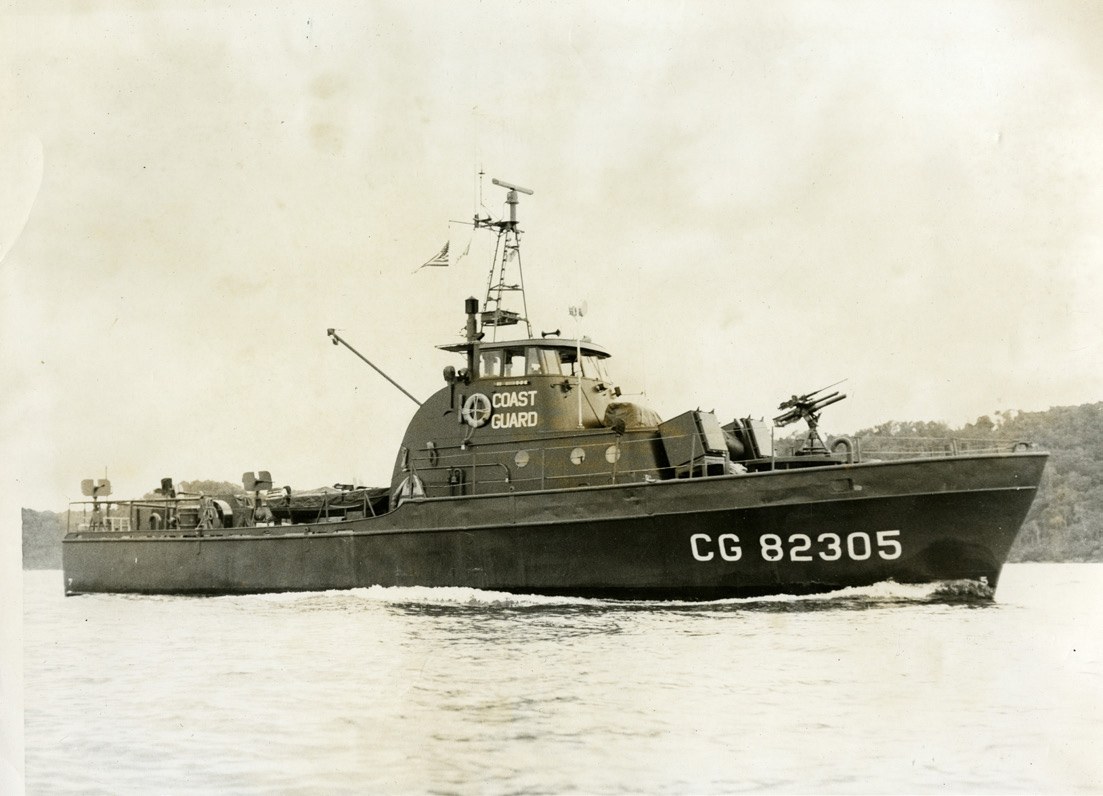
In 1965, needing another resource to patrol the coastal and inland waterways of Vietnam, the Navy requested the Coast Guard to supply 17 82-foot Point Class pa trol boats outfitted with the 81mm Piggyback system for use in Vietnam.
The original request was for the craft only, as the Navy intended to man them with Navy personnel. However, the Coast Guard pushed back, stating that its experi enced crews were available for immediate deployment.
During the first two years the Piggyback-equipped patrol boats were used in Vietnam, the Coast Guard carried the weight of patrols.
Hicks’ invention gave the patrol craft 360 degrees of machine-gun coverage. He requisitioned enough .50 caliber machine gun mounts that the Coast Guard yard could manufacture the first 200 adaptors for patrol craft.
Two fleetwide sanctioned modifications were made to the gun during the war. Coast Guard gunner’s mates added an extended handle to make it easier to control the mortar when firing. They also cut out the bottom of the basketlike protective guard for the mortar’s recoiling parts. Prior to that alteration, the guard filled with expended .50 caliber cases that kept the mortar from fully recoiling. Other unsanctioned experiments adapting the mount to other weapons did occur, however, none were officially adopted.
The USCG successfully utilized the Piggyback system throughout the Vietnam War. The willingness of officers and enlisted men to explore options and weapons innovation was in keeping with the Coast Guard motto “Semper Paratus”, always prepared.
Images from this story